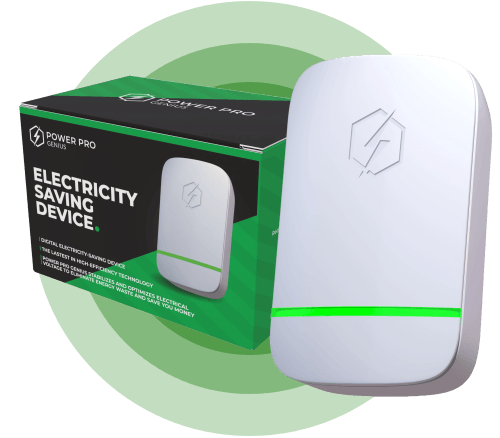
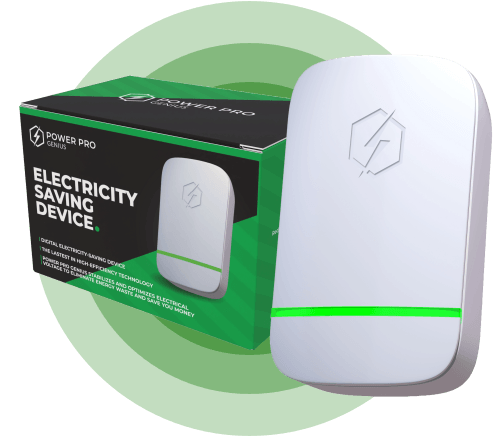
If you are looking for an easy way to improve electrical stability at home, you may have come across Power Pro Genius.
This compact device plugs directly into a standard electrical outlet. According to the product information, it is designed to stabilize voltage, filter unwanted electrical interference, provide surge protection, and support more efficient electricity use.
The concept sounds simple, but buyers should understand both its potential benefits and its limitations.
What Does Power Pro Genius Claim to Do?
Power Pro Genius works in the background after being plugged into an outlet.
Its main claimed functions include:
Stabilizing electrical current
Managing voltage fluctuations
Filtering electrical interference
Supporting smoother power delivery
Protecting appliances against certain surges
Potentially reducing wasted electricity
No professional installation or complicated setup is required.
Why Do People Choose Power Pro Genius?
Convenience is a major selling point.
Traditional electrical improvements can require professional installation or changes to household wiring. Power Pro Genius does not.
The device is designed to be plugged in and left operating.
This may make it attractive to people who want a straightforward electricity-management product without modifying their home’s electrical system.
Key Features
Compact Design
Power Pro Genius is small enough to connect directly to a standard outlet without taking up much space.
Automatic Operation
After installation, no daily adjustment is required.
Electrical Filtering
The product claims to reduce unwanted electrical interference.
Voltage Management
It is designed to support more consistent electrical flow.
Appliance Support
More stable electricity may help reduce unnecessary stress caused by certain electrical fluctuations.
No Regular Maintenance
The supplied information states that the unit requires no scheduled maintenance during normal use.
Power Pro Genius Benefits
The product’s main practical benefit is ease of use.
Installation takes only a short time and requires no specialized skills.
Power Pro Genius is also designed to operate silently, meaning users can leave it connected without adding noticeable noise to their living space.
Potential electricity savings are another advertised benefit, although the amount of any savings can vary.
Complaints and Drawbacks
Power Pro Genius has some limitations that customers should consider.
The most important is that electricity savings cannot be guaranteed.
Different homes have different wiring, appliances, electricity usage patterns, and environmental conditions.
Another limitation is time. Users may need to monitor several billing periods before they can reasonably determine whether the device has made a difference.
Three-Step Setup
1. Select an outlet
Choose an appropriate indoor wall outlet.
2. Connect Power Pro Genius
Plug the unit directly into the outlet and check that its indicator shows it is receiving power.
3. Leave it operating
Keep the unit connected while monitoring your electricity consumption.
The process does not require special tools or electrical knowledge.
How to Check Whether It Is Working
Instead of looking only at how much money you paid, check the number of kilowatt-hours used.
Why?
Your electricity company may increase or decrease rates. Hot or cold weather can also cause major changes in heating or cooling costs.
Comparing kWh consumption across similar periods gives you a better idea of whether your actual electricity use has changed.
Power Pro Genius Cost
According to the supplied pricing:
1 unit costs $49
Buy 2 and get 1 free for $98
Buy 3 and get 2 free for $147
Different packages are promoted for different property sizes.
Check the latest pricing and terms before making a purchase.
Refund Guarantee
Power Pro Genius comes with a stated 60-day refund period.
This gives customers time to evaluate the product.
Buyers should read the complete guarantee terms because refund eligibility and return procedures may be subject to specific requirements.
Who Might Consider Power Pro Genius?
The device may appeal to people who:
Want a simple plug-in electricity device
Prefer something that does not require professional installation
Want to monitor their household energy use
Are interested in electrical stabilization
Understand that energy savings cannot be guaranteed
Is Power Pro Genius Worth It?
That depends on your expectations.
If you expect a small plug-in device to automatically cut a large percentage from every electricity bill, you may be disappointed.
If you view it as an electricity optimization product that is easy to install and evaluate over time, its concept is easier to assess realistically.
Conclusion
Power Pro Genius offers a very simple plug-and-play design.
Its claimed functions include voltage stabilization, electrical filtering, and surge management, with potential energy optimization as an additional benefit.
The most sensible approach is to monitor actual kWh consumption before and after installing the device.
That provides a more reliable way to determine whether Power Pro Genius is making a noticeable difference in your particular home.
FAQs
How is Power Pro Genius installed?
Simply plug it into a suitable indoor wall outlet.
How quickly does it work?
The device begins operating when connected, but the manufacturer recommends several weeks before evaluating potential results.
Does it guarantee lower bills?
No. Electricity savings can vary depending on household conditions.
Can it be used in offices?
The supplied information describes it as suitable for homes and offices.
Maybe you’ve even replaced old bulbs and appliances with more efficient versions.
And then the electricity bill arrives…
Still higher than expected.
That’s exactly why small plug-in electricity-saving devices like Power Pro Genius attract so much attention.
Power Pro Genius is marketed as a home electricity optimization device. You plug it into a standard wall outlet, leave it running continuously, and the manufacturer says its internal components help stabilize electrical current, filter electrical noise, and compensate for reactive power.
The installation couldn’t be much easier.
But here’s the important question:
Can a small device plugged into one outlet actually make a meaningful difference to your electricity bill?
That’s where the marketing needs a closer look.
Power Pro Genius at a Glance
Editor’s Rating: ★★★☆☆ 3.3/5
Product: Power Pro Genius Category: Plug-In Electricity Optimization Device Installation: Standard indoor wall outlet Wi-Fi/App: Not required Batteries: None Maintenance: None stated Main Claims: Electrical stabilization, harmonic filtering and reactive-power compensation Starting Price: $44.10 for one unit in supplied offer Home Sizes: Different quantities recommended depending on property size Guarantee: 60 days advertised Best For: Buyers who understand the difference between electrical power-quality concepts and guaranteed residential energy savings
The manufacturer describes Power Pro Genius as an optimization device rather than a generator, backup battery, or replacement for conventional surge protection.
That distinction matters.
What Is Power Pro Genius?
Power Pro Genius is a compact electrical device designed to remain plugged into a household outlet 24/7.
There’s no app.
No Wi-Fi.
No display showing your energy consumption.
No battery.
And no complicated setup.
According to the supplied information, a green indicator light simply confirms that the unit is receiving power and operating.
Behind that simplicity are several technical claims.
The manufacturer says Power Pro Genius uses:
Electricity Stabilizing Technology
Advanced capacitors
Harmonic filtering
Electrical-noise filtering
Reactive-power compensation
These are based on real electrical-engineering concepts.
But that’s only half of the story.
The Technology Sounds Legitimate—But There’s a Catch
Capacitors are real.
Reactive power is real.
Harmonic distortion is real.
Voltage fluctuations are real.
Power-factor correction is real.
Electrical engineers deal with these concepts every day.
The source itself correctly points out, however, that the existence of these engineering principles doesn’t automatically establish how effectively they’re implemented inside this particular compact residential plug-in product.
That’s the key issue with Power Pro Genius.
A legitimate engineering term shouldn’t automatically be interpreted as proof of a meaningful reduction in your utility bill.
Can Power Pro Genius Really Lower Your Electricity Bill?
This is the part I’d approach most cautiously.
In many residential electricity plans, customers are billed primarily for real energy consumption measured in kilowatt-hours (kWh).
Improving power factor can be valuable in industrial and commercial settings where reactive power and demand can affect billing.
Residential billing is different.
So even if a plug-in capacitor changes some electrical characteristics within a home, that doesn’t automatically mean the utility meter will record a meaningful reduction in kWh.
The supplied source says the manufacturer doesn’t promise one fixed savings percentage for every household. Instead, it says results depend on electrical characteristics, appliances and energy use.
That’s more reasonable than promising everyone a 30%, 40%, or 50% reduction.
Still, I’d want independent testing showing measured before-and-after kWh consumption under controlled conditions before accepting substantial electricity-saving claims.
The supplied material includes testimonials claiming monthly savings such as:
$33.
$45.
$50.
$55.
Those numbers sound impressive.
But there’s a problem.
Electricity bills naturally change.
Your air conditioner may run more in July than May.
Heating demand changes with weather.
Guests can increase consumption.
You might use the dryer more frequently one month.
Utility rates can change.
EV charging varies.
Vacations reduce consumption.
A lower bill after installing a device therefore doesn’t prove the device caused the reduction.
The source appropriately acknowledges that these are manufacturer-published customer experiences and shouldn’t be assumed to represent every purchaser.
I’d go one step further:
Testimonials aren’t a substitute for controlled electrical measurements.
What Does “Dirty Electricity” Mean?
This phrase appears frequently in electricity-saver marketing.
It can sound mysterious.
In electrical engineering, however, household power can experience things such as:
Harmonic distortion.
High-frequency noise.
Transient disturbances.
Waveform irregularities.
Modern electronic devices with switching power supplies and electronic controls can contribute to these phenomena.
“Dirty electricity” is essentially a broad consumer-friendly term sometimes used to group different power-quality issues together.
The supplied source explains this distinction reasonably well.
Power Pro Genius is marketed as filtering some of this unwanted electrical noise.
Again, though:
Reducing electrical noise and reducing the number of billable kilowatt-hours aren’t automatically the same thing.
What About Reactive Power Compensation?
This is another important claim.
Some electrical loads—particularly motors—draw reactive as well as real power.
Power-factor correction can compensate for this.
That’s established electrical engineering.
But residential consumers typically need to ask a different question:
Does correcting this at one household outlet meaningfully reduce what my specific utility meter bills me for?
That’s what matters financially.
Without independent product-specific measurements, I wouldn’t assume the answer is automatically yes.
Editor’s Verdict
★★★☆☆ 3.3/5
Power Pro Genius is easy to install and uses terminology connected to genuine electrical-engineering concepts.
That’s why I wouldn’t dismiss it simply because it’s a small plug-in device.
But I also wouldn’t make the opposite mistake.
Real engineering concept ≠ proven electricity-bill savings.
That’s the gap I’d want Power Pro Genius to close with strong independent testing.
The product becomes much easier to evaluate if buyers treat it as an experimental household power-quality/optimization device rather than something guaranteed to slash utility bills.
What We Like
Extremely simple installation
No electrician required according to manufacturer
No Wi-Fi
No app
No batteries
No recurring subscription stated
Maintenance-free design claimed
Uses concepts that exist in electrical engineering
Different configurations offered for different home sizes
Designed for continuous operation
60-day return period advertised
What to Keep in Mind
Meaningful kWh savings aren’t independently established by supplied material
Results would depend heavily on the electrical system
Multiple units are recommended for larger properties
No real-time energy-monitoring dashboard
Doesn’t replace sensible energy-saving habits
Doesn’t replace conventional surge protection
Manufacturer safety/certification claims should be independently verified
Is Power Pro Genius a Surge Protector?
No.
This is an important distinction.
The manufacturer discusses capacitors buffering smaller electrical disturbances and reducing everyday electrical stress.
But the supplied source specifically states that Power Pro Genius isn’t intended to replace conventional surge protection against events such as major utility faults or lightning-related surges.
If you need surge protection, use equipment specifically designed and appropriately rated for that purpose.
How to Install Power Pro Genius
The manufacturer’s installation process is simple.
Step 1: Choose a Wall Outlet
The supplied instructions recommend placing a single unit near the main breaker panel where practical.
Step 2: Plug It Directly Into the Wall
The manufacturer advises against connecting it through an extension cord, power strip, or plug-in surge protector.
Step 3: Check the Green Light
The indicator should illuminate when the device receives power.
Step 4: Leave It Connected
Power Pro Genius is designed for continuous 24/7 operation.
Step 5: Don’t Judge It From One Bill
The manufacturer recommends comparing electricity usage across multiple billing cycles.
I’d agree with the last point—but use kWh, not merely the dollar amount on your bill.
A Better Way to Test Power Pro Genius
If you’re going to evaluate a device like this, don’t simply compare:
June bill: $180
with
July bill: $150
That’s not a controlled comparison.
Instead, record:
Monthly kWh.
Billing-period length.
Average outdoor temperature if heating/cooling dominates usage.
Major changes in occupancy.
EV charging.
Heating or air-conditioning use.
And any changes in appliance usage.
Ideally, compare similar seasonal periods.
A plug-level electricity meter can also help measure individual appliances, although it won’t establish whole-home effects by itself.
The more variables you control, the more meaningful your comparison becomes.
How Long Should You Test It?
The source contains somewhat varying timelines.
It discusses approximately 2–8 weeks in one section and recommends evaluating performance over two to four billing cycles elsewhere. For a utility-bill comparison, several comparable billing periods make more sense than a few days.
But remember:
Waiting longer doesn’t itself prove the product works.
You still need a meaningful comparison.
Power Pro Genius and Appliance Protection
The manufacturer also positions the device around creating a more stable electrical environment for electronics and appliances.
That includes refrigerators, HVAC systems, televisions, computers, and other modern equipment containing electronic control systems.
This sounds plausible at a conceptual level.
But I’d want product-specific measurements before claiming that Power Pro Genius extends appliance life or materially prevents electrical damage.
For significant surge protection, use equipment specifically designed and rated for that job.
Power Pro Genius Safety
The supplied information states that Power Pro Genius is intended for residential electrical systems up to 250 volts and claims UL approval and RoHS compliance.
Those are important claims for a product intended to remain energized continuously.
However, the supplied article doesn’t independently document certification identifiers.
Before leaving any plug-in electrical product connected around the clock, I’d verify:
The exact model number.
The safety certification mark.
The certification/listing number where applicable.
Voltage compatibility.
And the manufacturer’s installation instructions.
Don’t rely solely on promotional wording.
Does It Work With Solar?
The manufacturer says Power Pro Genius is compatible with grid-tied and off-grid solar systems and operates on the home’s electrical side rather than directly modifying panels, inverters, batteries, or charge controllers.
That’s a manufacturer compatibility claim.
If you have an expensive solar/battery installation, confirm compatibility with your system documentation or installer before adding electrical devices.
How Many Power Pro Genius Units Do You Need?
According to the supplied information, recommendations vary according to property size and electrical layout.
Smaller apartments may be directed toward one unit.
Medium-sized homes may be directed toward two or three.
Larger multi-level homes may be directed toward several devices distributed across different electrical zones.
I wouldn’t buy multiple units solely because a marketing page says more coverage equals more savings.
The electrical justification for additional units should make sense for your property.
Power Pro Genius Price
The supplied promotional pricing lists:
Package
Price Per Unit
Total
1 Unit
$44.10
$44.10
2 Units
$44.10
$88.20
3 Units
$35.28
$105.84
4 Units
$34.86
$139.45
5 Units
$34.92
$174.60
6 Units
$35.19
$211.14
These are the prices shown in the supplied material and may change.
Interestingly, the per-unit price isn’t perfectly linear.
The four-unit package has the lowest stated unit cost among those listed.
But don’t choose a package based solely on price per unit.
The more important question is how many devices—if any—your home actually needs.
Check Power Pro Genius Price & Availability
Power Pro Genius Money-Back Guarantee
The supplied material advertises a 60-day money-back guarantee.
Before ordering, confirm the current conditions, including:
Whether opened/used units qualify.
When the 60-day period starts.
Whether return shipping is deducted.
Whether original shipping charges are refundable.
And whether any restocking fees apply.
Who Might Consider Power Pro Genius?
Power Pro Genius may interest homeowners who:
Enjoy experimenting with home-energy technology
Understand that savings aren’t guaranteed
Want a simple plug-in device
Don’t want an app or complicated installation
Are interested in household power-quality concepts
Are willing to track actual kWh consumption
Have verified the product’s electrical safety certification
Understand it isn’t a substitute for proven energy-saving measures
Who Should Probably Skip It?
It may disappoint you if you:
Expect a huge reduction in your next bill
Think it generates free electricity
Expect guaranteed 30–50% savings
Need real-time energy monitoring
Need a proper surge protector
Have unresolved electrical problems
Aren’t willing to measure results carefully
Would rather invest in energy-saving measures with clearer evidence
Frequently Asked Questions
What is Power Pro Genius?
It’s a plug-in device marketed for household electrical optimization through stabilization, filtering, capacitors, and reactive-power compensation.
Does Power Pro Genius generate electricity?
No.
The supplied information specifically describes it as optimizing existing household electricity rather than generating additional power.
Will Power Pro Genius cut my electricity bill in half?
The supplied material doesn’t establish that.
The manufacturer itself says outcomes vary.
Does Power Pro Genius work immediately?
The green indicator activates when connected, but the manufacturer recommends evaluating claimed savings over multiple billing cycles.
Does it use Wi-Fi?
No Wi-Fi setup is described.
Is an app required?
No.
Does it need batteries?
No batteries are described.
Does it replace a surge protector?
No.
Can I use it with an extension cord?
The manufacturer recommends plugging it directly into a wall outlet rather than an extension cord or power strip.
Does Power Pro Genius work in apartments?
The manufacturer describes apartments and condominiums as compatible environments.
Can renters use it?
Its plug-in format requires no permanent wiring changes, making it portable between properties.
Does Power Pro Genius work with solar panels?
The manufacturer claims compatibility with both grid-connected and off-grid solar installations.
Is Power Pro Genius UL approved?
The supplied material claims UL approval, but I’d verify the exact model’s certification/listing independently before relying on that claim.
How much does Power Pro Genius cost?
The supplied promotion lists one unit at $44.10, with several multi-unit packages available.
How many units do I need?
The manufacturer bases its recommendations on property size and electrical layout. Larger properties are directed toward multiple units.
Does Power Pro Genius really work?
The electrical concepts used in its explanation are real.
What’s less certain from the supplied evidence is whether this particular plug-in device produces meaningful, measurable reductions in residential kWh consumption.
That’s the distinction buyers should focus on.
Is Power Pro Genius a scam?
The supplied material presents Power Pro Genius as a defined plug-in electrical product with installation instructions, specifications, pricing, compatibility claims, and purchasing terms.
Those facts alone don’t prove its electricity-saving claims.
A more useful question is whether independent testing demonstrates that the finished device materially reduces your home’s metered energy consumption.
The supplied material doesn’t establish that.
Is Power Pro Genius Worth It?
Power Pro Genius is easy to use, but I wouldn’t buy it based on dramatic electricity-saving expectations.
The strongest part of the product’s story is simplicity.
Plug it in.
Check the indicator.
Leave it running.
That’s about it.
And the manufacturer references genuine electrical concepts such as capacitors, harmonics, reactive power, and current stabilization.
But those technical terms shouldn’t distract from the measurement that ultimately matters:
Does your utility meter record fewer billable kilowatt-hours because Power Pro Genius is plugged in?
The supplied information doesn’t independently establish that.
If you’re interested in experimenting with household electrical optimization and you’re comfortable carefully measuring the results, Power Pro Genius may be interesting.
If your primary goal is simply reducing your electricity bill, I’d prioritize proven measures such as reducing unnecessary consumption, improving heating/cooling efficiency, fixing insulation or air-leakage problems, and replacing genuinely inefficient equipment.
Editor’s Rating: 4.3/5
Check Current Power Pro Genius Pricing
Electricity savings can vary substantially between households. Manufacturer claims and customer testimonials should not be interpreted as guaranteed reductions in utility costs.